
FERAL CAT TRAPPING PROGRAM
Updated: Jun 23

SFCL is pleased to announce that we were successful in receiving funding under the State Government’s Feral Cat Management Grants. The Feral Cat Management (FCM) Grants are an initiative of the State Government, delivered by the Department of Primary Industries and Regional Development’s (DPIRD) in partnership with the Department of Biodiversity, Conservation and Attractions (DBCA).
SFCL FCM Project aims are the protection of native species in and around reserves and national parks, as well as enabling landholders to become more confident and gain success from their feral cat management efforts, from whatever level of skill they begin.
The Tone-Perup Nature Reserve, and the Upper Warren region more broadly, is one of the most important areas for the conservation of threatened mammals that have gone extinct across most of their distribution across Australia. This includes the numbat, woylie (brushtail bettong), and chuditch. It is also very important for many Western Australian mammal species such as the ngwayir (western ringtail possum), tammar wallaby, quokka, wambenger (brush-tailed phascogale) and quenda (southern brown bandicoot). The introduced European red fox and the feral cat have caused the extinction of many other native Australian mammals, and remain the greatest threat to the survival of many more, including most native mammals in southwestern Australia. DBCA, in collaboration with its partners, are working hard to reduce the impacts of introduced predators on native fauna. The Perup and Upper Warren have been a focus of efforts to integrate the control of feral cats using new tools and approaches, with existing fox control methods as part of the Western Shield Program. The focus of the SFCL FCM Project in this region during its initial phase will expand the impact of the DBCA’s regional feral cat management strategies into the surrounding private properties. As these reserves contain such significant populations of native species, it is therefore the most ecologically damaging feral cats that will be the target for removal as part of this Project.
The SFCL FCM Project will:
- Deliver landholder training in feral cat behavior, tips for monitoring and control strategies;
- Survey properties for evidence of feral cats and their pathways;
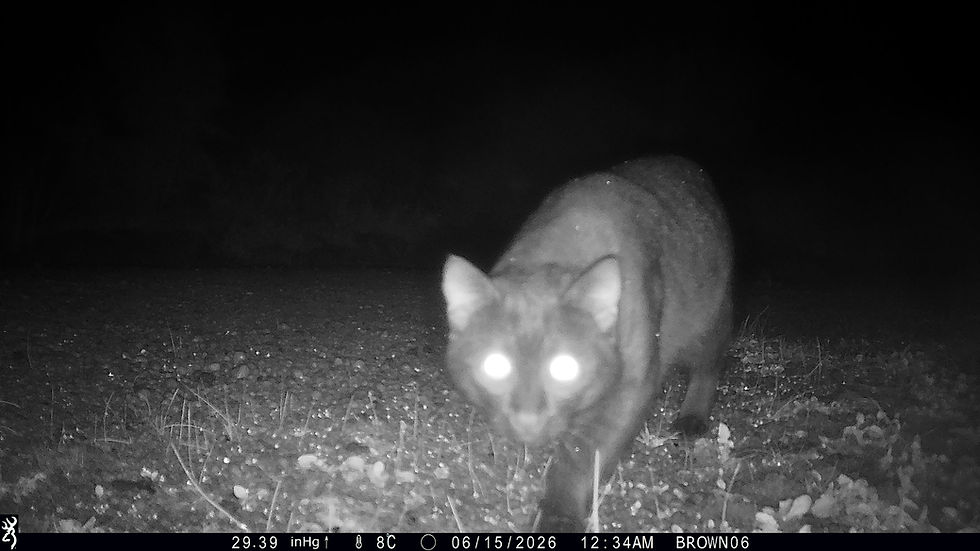
- Install and maintain pest and native species monitoring cameras;
- Install cage traps (where appropriate);
- Provide tracking and shooting services (where appropriate)
- Provide mentoring opportunities at all steps through the feral cat control process.
For landholders that are not confident in carrying out trapping or shooting, observation skills will be developed and access to networks of qualified support will be provided. The peer-to-peer learning and local support opportunities built through this project, save time and money for the landholder and facilitated sustained, broad-scale pressure on the feral cat population. More hands make light work.
The project will also deliver a series of workshops for the education of the wider community in the areas of feral cat behaviours and biology; feral cat monitoring and control techniques; and threatened species identification and monitoring. In parallel to these workshops, the creation of a Warren Region Feral Cat Working group will take the shared knowledge and skills of this Project beyond the Project’s endpoint and beyond the property boundaries of those participating, to ensure feral cat management is promoted and supported with the region into the future.
SFCL thanks the Western Australian Government for supporting this long term community knowledge and feral cat population suppression investment in the Warren region.
State NRM Program: https://www.facebook.com/nrmpwa/


Comments