
Hugelkulture in an Australian Context
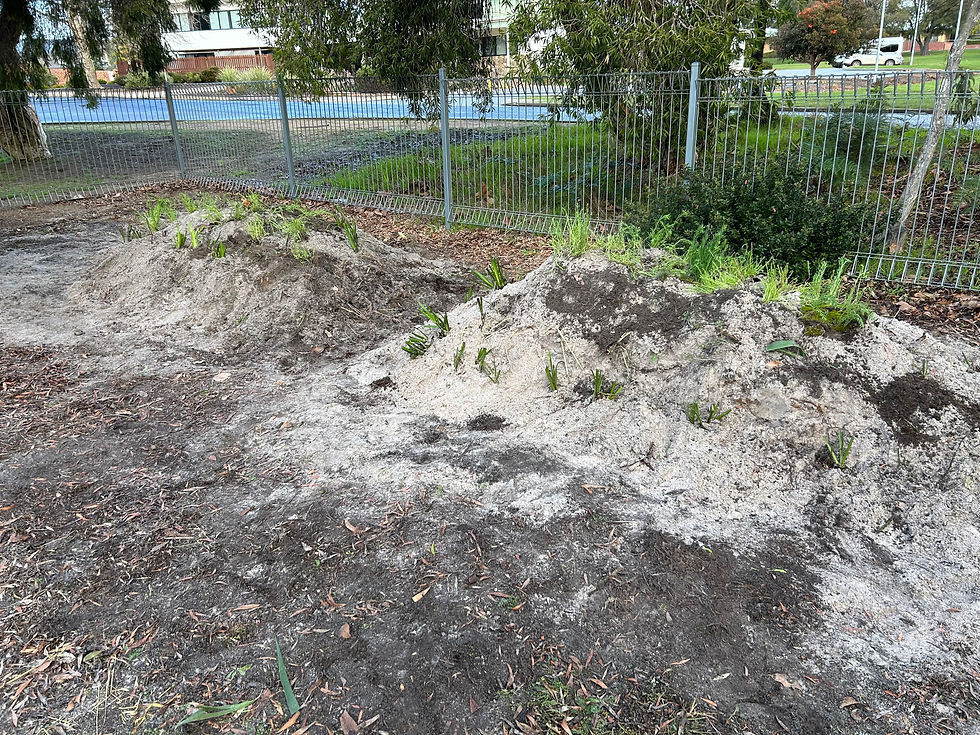
Following our successful Hugelkulture workshop last Sunday, I have been asked a few questions by our Facebook community about how we actually made the two hugelkulture beds in the photos. Firstly, it is important to realise that a hugelkulture bed is not an instant vegetable bed with beautiful rich soil; it is a slow burn. A hugelkulture bed is an amazing growing system that uses whatever organic materials you have, in particular, woody prunings, to eventually produce an insulating, slow feeding, moist, fertility mound.
Here’s how we made ours and what we plan to do with them.
1. We (well not me, but our hard-
working workshop attendees) dug two trenches about 30cmm deep, 1m wide and 2m long (roughly). The ground is very sandy there, so it was easy digging, if it was clay, I’m sure we wouldn’t have dug as deep.
2. Next the prunings were roughly cut up so there was no ‘sticking out pieces’, which were stomped down as we layered them into the trenches.
3. As we went, we layered some green prunings, grassy weeds and more woody prunings onto the pile. We added a bucket of compost to each bed and some biochar (not necessary, but a beneficial bonus). There is a large patch of giant bamboo nearby, so we also collected bamboo leaves and some very mature soil from the patch and spread that on as well.
4. Once the prunings ran out and it was heavily stomped down as much as we could, the sandy soil from the hole was put back on top and spread out.
5. I didn’t have as much fresh green as I would have liked for the beds, more nitrogen would help a faster breakdown of the mound, but it will still work without it. If you have grass clippings, mix that in as you go.
6. Into the mounds we planted rescued Everlasting Daisies and kangaroo paws that all needed a new home. I also stole a few kangaroo grasses from Kylie’s Firewise Garden nursery stock (because she will never know).
Turn your problem into a solution!
We had a huge excess of prunings that were headed for the tip or burn pile and everlastings and kangaroo paws that needed a new home. Now, instead of losing all that precious carbon and organic matter, we put it back in the ground and created perfect hugelkulture demonstration gardens. For the first summer, the mound will have to be watered once a week but after that, it should really take care of itself. This, of course, depends on what you plant in it. I envision that in one years’ time; we could plant a flowering deciduous shade tree or native bottle brush in the beds for wildlife habitat.
I have a hugelkulture bed at home that I am slowing filling up as I prune various plants or clean up our firebreak. This bed is not only giving me a home for all my woody prunings, but is also serving as a water slowing feature (it’s on a slope), reducing the amount of water flowing into my vegetable bed and ending up in my vege garden paths. So far, it’s working a treat, cost nothing and is easy to do anywhere. Why not give it a go?


Comments